Friday, July 10, 2015

CAUWW: The Lost (Classroom) Episodes


Photo: CAUWW class with Dr. Palmira Rios Gonzalez


I gave this entry the headline of "the lost episodes" because there were a number of CAUWW classes that I did not properly write about while I was in Puerto Rico. In my defense, (as I mentioned previously) I was a victim of weak WiFi at the Casa Carmona - and moreover, we were learning and doing so much, in such a short period of time, I was not able to synthesize everything immediately. I digress.


First and foremost, I would like to  mention Dr. Maria Elba Torres Muños, professor for the Advanced Studies of Puerto Rico and the Caribbean. She met with us on the first day of class to give us an overview of the CAUWW course, along with Dr. Marta Moreno Vega (President and Founder of CCCADI). She gave us a good foundation about the relationship between art, culture and commerce in Puerto Rico. Dr. Maria Elba would meet with us again the following week (I will write more about her second presentation, towards the end of this article).

Dr. Palmira Rios Gonzalez, a sociologist, civil rights activist, writer and teacher (who was just named Dean of the University of Puerto Rico) also met with us on our first day of class. With a most thoughtful and warm manner, Dr. Rios gave us a vast breakdown of the political and economic history of the island. This information was invaluable to our understanding and giving context to what we would encounter later on in the course.


Visual artist Antonio Carrión Torruellas gave us a wonderful class in which he began by saying, "El arte es el vehículo del espíritu" (art is the vehicle of the spirit). He showed us some of his beautiful paintings, as well as some of his silkscreen posters. (We would hear various times throughout this trip, how integral the art of silkscreen was and is in Puerto Rico.) Mr. Carrión was one of the artists involved in DIVEDCO (Division of Community Education), a social experiment run by the US Department of Education between 1949-1989, employing all forms of artwork to educate people on the island on various social and health issues. Mr. Carrión is the only surviving member of the DIVEDCO collective and he is still painting, teaching students and passing on his knowledge and spirit.


Professor Victor Ortiz, a social activist and community organizer came in and made a presentation, Working Within Community - Issues to be Considered. With a dynamic and warm energy, he explained about the importante of eco-communities, community work development, economic community development, and economic solidarity among other things. Later on in the trip we had the opportunity to visit some of the communities that he had talked about: Cooperativa Piñones se Integra (COPI) and Centro Comunitario Península de Cantera. 


The same day, artist, designer ad educator María De Mater O'Neill from Rubberband PR Design Studio came in to present a workshop, Storytelling and Resilient Strategies for Creatives. This was a hands-on workshop in which she showed us how to use a Bounce & Design Toolbox that she created as a means for people to solve problems and thrive in challenging situations. 


Later, we had a visit from Panama Alba who was a member of the Young Lords making a presentation, the Young Lords Party - A Political and Cultural Movement. He filled us in on the history and significance of the YLP, and recounted some of the experiences he had with them living in New York City as a young man in the 1960/70's when group was most active. His passionate first-hand accounts about the conditions under which people of color in urban areas were living under at the time was extremely poignant and relevant to so many of the issues that we are still dealing with today. His perspective on activism was inspiring as a person who participated in some very challenging feats, such as the takeover of Lincoln Hospital in the Bronx in 1970 (which resulted in lasting policy changes).  


The day that we went to have class at the University of Puerto Rico in Rio Piedras, we were met first by Yolanda Arroyo Pizarro, writer, poet and cultural activist presenting on Engaging the Gender Narrative within a Traditional and Colonial Framework. She talked to us about a number of things, including the importance of self identity, culminating in her reading one of her beautiful poems to us (which made me shed a tear). Later we met with artist Pedro Lugo, who had participated in the major student strike at UPR in 2010. After his presentation, he took us for a tour of the campus to view murals made by students, some of them there since 2010 and some new. Last but not least, our CAUWW coordinator, Regina Bultron-Bengoa gave a presentation, Who's Wall is it Anyway?-Issues to Consider When Working With Public Art and Communities. Being a multi-media artist and native of Puerto Rico herself, she discussed the process in which she organized an interactive community mural project in the town of Rio Piedras for its 300-year anniversary (which we were able to go see for ourselves). 


After we had had a week out on the field, Dr. Maria Elba met with us again to give us a presentation on the Hidden Art History of Puerto Rico. She explained how the traditional canon of Puerto Rican art was created in the image of its ruling countries' (first Spain then the United States) images - and she brought to light a lesser-documented "Antillean," Caribbean or Afro-Boriqua aesthetic which also exists, but under the radar in many cases. Lucky for us, Dr. Maria Elba is the foremost art historian/critic on the latter, and she has an amazing collection of visuals that she was able to share with us. Some of the artists she mentioned were: Jose Campeche, Juan DePrey, Jose Torres Martino, Carlos Raquel Rivera, Jose Maduro, Rafael Tufino and Cecelia Orta.

Later that day (after a long, hot walk through the city of Santurce) we returned to the oh-so-cold classroom (Interamerican University is serious about their air conditioning!) to meet with artist Chemi Rosado and founders of the elTaller.de organization, Felix DePortu and Javier Carrosquillo. Chemi described himself as a socially-engaged artist, showing us slides of some of his amazing work (www.chemirosado-seijo.com) and explaining the concepts behind them. His projects are fascinating in that they seem to be at the intersection of visual art, happenings, social justice, community intervention and group participation. Javier and Felix of elTaller.de (which translates into, "the workshop of...") explained to us how their organization identifies needs in various communities throughout Puerto Rico and then goes in to work with them on creating art projects, bringing in the appropriate local visual artists for the particular project.

All in all I cannot fully explain how much we learned from these presentations by people who are experts in each of their respective fields. This is obviously just a brief summary - a whole article could be written about each one of them (and probably books on some of them too). 


Wednesday, July 8, 2015

The final two days of the CAUWW program in Puerto Rico...

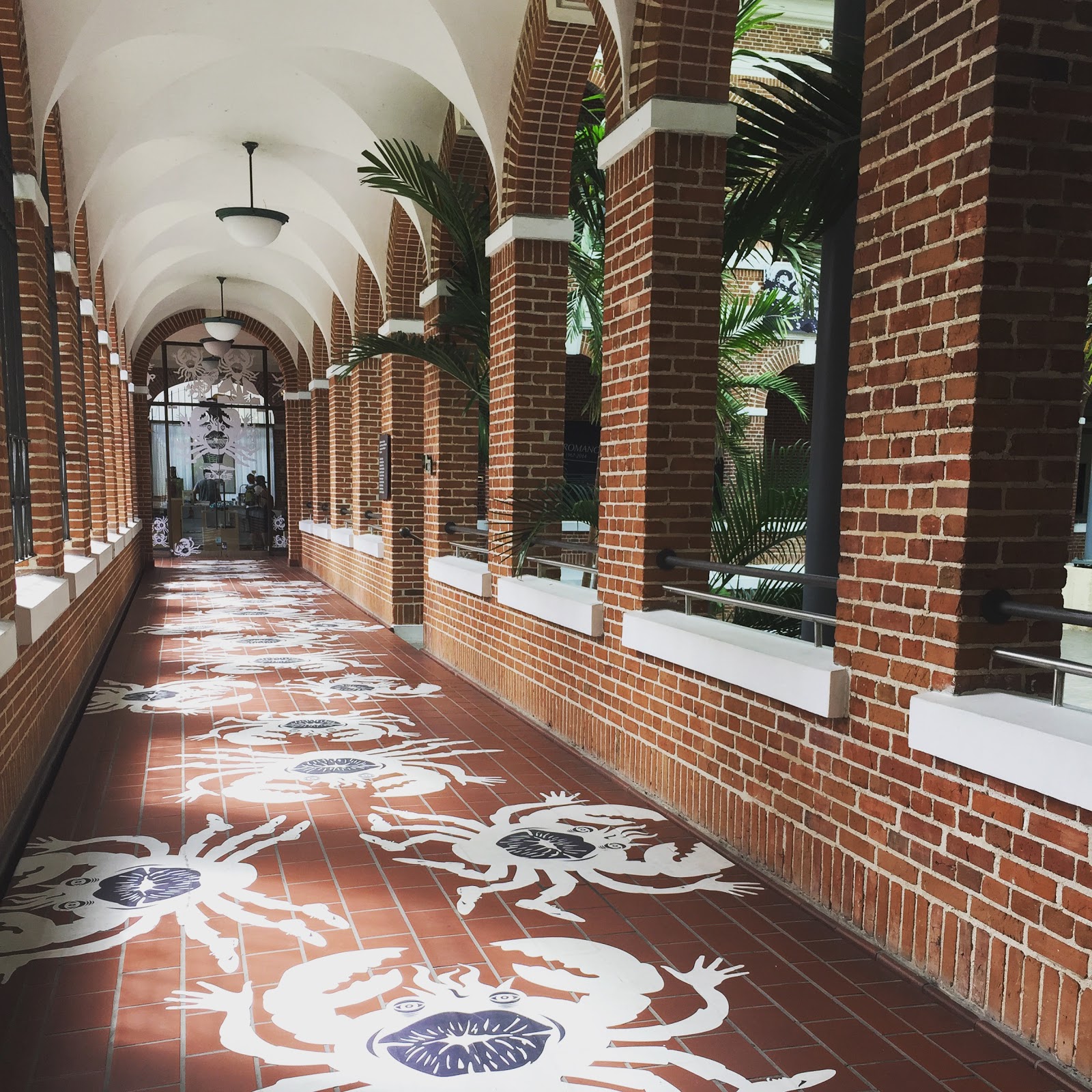
Photo: Hallway at Museo de Arte Contemporaneo de Puerto Rico (MAC)

I lost track of blogging about what we did during the last two days of the CAUWW program... Let me disclose now that during the whole time we were living on campus, we did not have a proper WiFi connection; so, I actually did all of the blogging (writing and photo uploading) through my iPhone. Kinda challenging!

On Thursday, June 2nd, we took a trip to the Museo de Arte Contemporaneo de Puerto Rico (MAC). We were met by artist, Lionel Cruet, who gave us a tour of the show Colonial Comfort. After seeing so many types and styles of art it was a nice finale to encounter a contemporary collection - especially of artists responding to the concept of colonialism (a theme which we have been discussing a lot on this trip to the commonwealth of PR, which some would argue is actually a US colony). Lionel showed us around and explained about the works (including his own piece) in this group show, put together by guest curator Lisa Ladner (el-status.com) and originally shown at the Caribbean Museum Center for the Arts in Saint Croix.

From there we went back to campus to work on our final project presentations. For the culmination of the CAUWW program, each of us students were expected to take what we had learned and come up with a concept for individual projects, moving forward. Our presentations would take place the next morning, the last day of class. Back at the Casa Carmona guesthouse, for maybe the first time, there was no talking to be heard - only the clickity-clack of keyboards and the scribbling of pens to paper. On Friday morning, we took a few hours making our presentations and Dr. Vega gave us feedback and guidance. From there, she took us out to lunch, our last meal together as a group, to El Patio Sole in Santurce. Lunch was great, but I felt a little sad that the experience was coming to an end.

(To see more photos, go to my Instagram: @whippedhoney.)

Adal, "Operation Mind Scrub."


Janet Cook-Rutnik, "The House of Dreams."

Janet Cook-Rutnik, "The House of Dreams."

Liza Morelez-Ortis, "La Calle, Tendedero."

Lionel Cruet with his work, "On Related Circumstances."


El Patio de Sole restaurant in Santurce.


Thursday, July 2, 2015

A day in Caguas

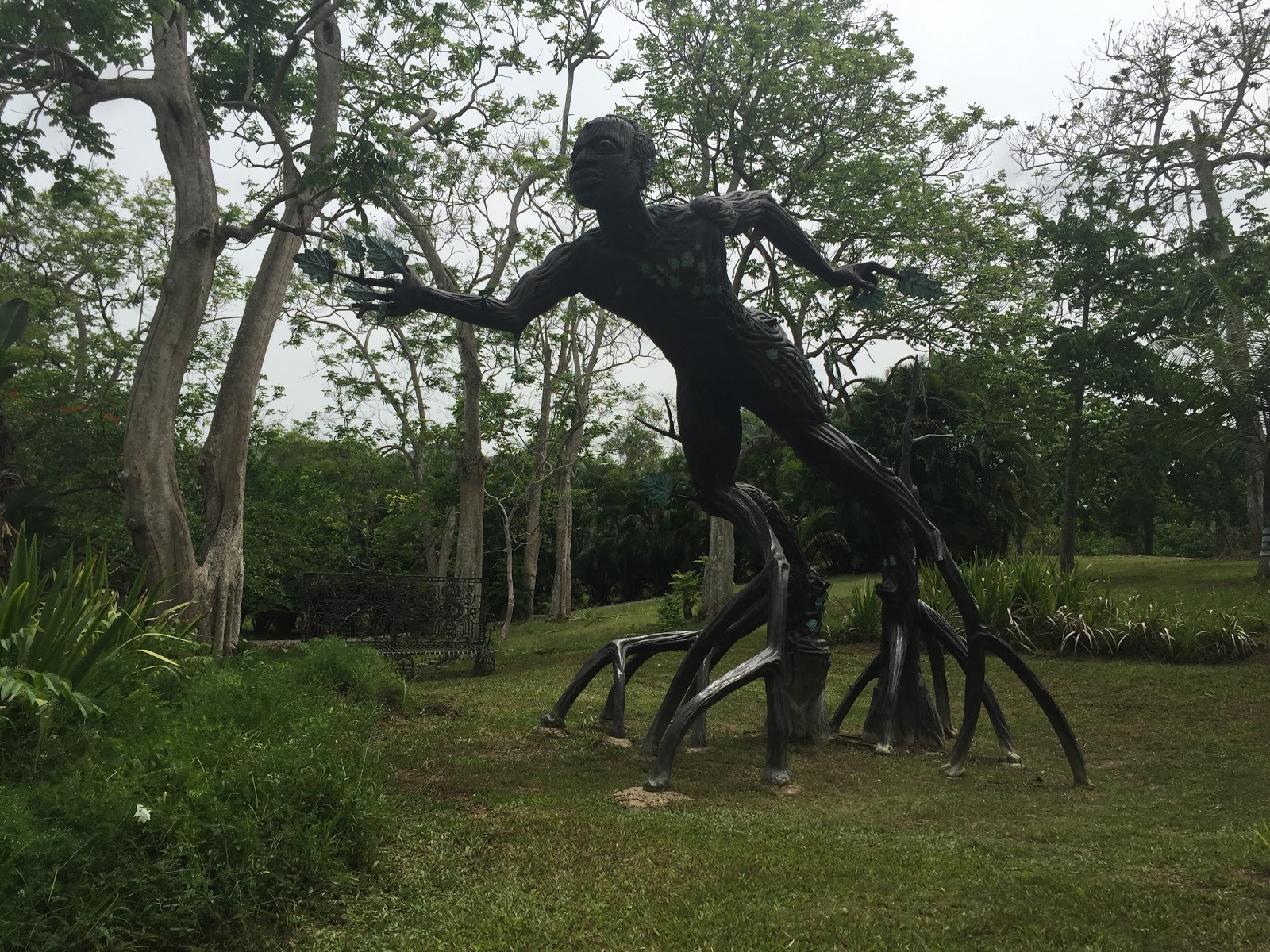
"Ancestral Africana," installation by Samuel Lind, at the Botanical Gardens in Caguas.


The thing about Puerto Rico that's so interesting to me is that it is such a small island, but each area and town are vastly different. Within an hour's drive in any direction, you might find yourself in a city, at the beach, in the mountains or some other atmosphere.

On Wednesday we traveled to the area of Caguas. Starting at the Caguas Tourism Office, we prepared for a museum walk, La Ruta del Corazón Criollo. Our friendly tour guide explained how Caguas is a center of arts and culture, with many museums, three of which we would see: Museo Del Artes Populares (folk art), Museo Del Tobaco and El Museo De Arte De Caguas. From there we took a short drive to the Botanical Gardens so see a sublime sculptural installation by Samuel Lind (whom we had the pleasure of meeting in his home studio last week). 

From there we drove high up into the mountains of Caguas, to the community of San Salvador. The landscape is one of the most beautiful one can find on earth (I regret not being able to take proper pictures). We were welcomed to the Community Museum of San Salvador for a presentation and a tour of their space. Their collection consists of various items collected from the community with the intention of preserving the culture and history of San Salvador.


Wednesday, July 1, 2015

Rainy day at Península de Cantera.

Photo: The estuary at Penninsula de Cantera


On Tuesday, we took a trip to the community of the Peninsula de Cantera. This is a waterfront town which had a lot of economic and environmental challenges, particularly with trash and landfill contamination. After Hurricane Hugo devastated the area in 1989, some community members started to organize and created what would be a revolutionary initiative, resulting in a new law, Law 20, which allows the community to work together with government to make decisions about their own community. From there, they created Centro Comunitario Península de Cantera, including a massive trash cleanup effort, revitalization of the waterfront, relocation for those in need, and the creation of many community programs, as well as protection of the waterfront lands as an estuary and the creation of ecotourism for the area. The best thing about La Cantera is that all of neighbors are encouraged to give input and participate, including the children and teenagers, as they see them as the future leaders of their community. Law 20 has now been in effect since 1992 (and was renewed in 2012 for another 20 years) and is being studied by other communities and scholars for its success. 

As for our visiting group, being that it was raining quite hard (which is a good thing, since there's been a drought going on recently in Puerto Rico) we were unable to get the full tour of the estuary. We did however, get to see some of the waterfront, as well as walk though the town of La Cantera. 


Tuesday, June 30, 2015

Santurce Es Ley.

Photo: Murals on a building in Santurce.


Monday's excursion was so visually overwhelming (in a good way) and also had a particularly personal discovery for me.

First, in the morning, we had an incredible class with Dr. Maria Elba Torres, who's a co-creator of the CAUWW program, and a foremost expert on Puerto Rican art history. She showed us slides of images and explained to us about the different perspectives on, and aesthetics of Puerto Rican art - from the institutionally accepted Spaniard/European, and the American to the lesser known and documented Antillean/Caribbean aesthetic. The latter of which she has been researching, documenting, writing and teaching about, as it is her specialty as an art historian and educator. 

My classmates and I then piled in to the van for a trip to Santurce to meet with a local artist there named Javier Cintron. Javier is one of the artists that works with the event Santurce Es Ley (Santurce is Law), which invites artists to create public murals all over town. And with that, the whole town is COVERED in huge and amazing art. It's really quite a sight to see. Javier took us on a tour all around to view murals that were created by fellow artists, as well as himself. One of the most poignant things that Javier said, which stuck with me was that the public mural movement in Santurce has become so strong and relevant that it alleviated the need for artists to rely on the acceptance of institutions like art galleries or museums. It allows them to have a voice and get their authentic messages out and impact upon the community. 

This visit had a particular relevance for me because my father actually lived in this city for some time (being born in the farmlands of Humacao and moving to Santurce for some time before immigrating to New York City). I hastily called my dad to ask him what street he lived on and as serendipity would have it, he lived on Monserrate street,  the same street as Javier! After our mural tour, Javier welcomed us into his home which was interesting since a part of his work is to illustrate the old houses of Santurce (one of which he lives in), and interesting for me too, since it's a part of my own family's history.

(There are lots more pics of the art of Santurce on my Instagram: @whippedhoney.)


Javier Cintron in front of Bikismo's mural in Santurce

Javier in front of his house


CAUWW with Javier in front of one of his murals


Monday, June 29, 2015

El Yunque and Luquillo


Photo: From the observation tower at El Yunque. 

On Sunday we took a break from the classroom and drove out to visit El Yunque rainforest and then Luquillo beach.  We were lucky to have one of our coordinators, Regina's BFF, Melanie, with us, as she happens to be a tour guide at El Yunque. I had been to the rainforest many years before  with my parents, so I had some idea of how lush it was. But being with Melanie was great because she taught us a bit about the history and took us on a hiking trail that lead to beautiful river. There were lots of people there (both tourists and local families) swimming and relaxing around the rocks. 

We worked up quite an appetite hiking around El Yunque, so after that, we went to eat some Puerto Rican goodies at a roadside  restaurant (yum!!!). And from there we headed off to Luquillo beach. Full bellies notwithstanding, we all got into our swimsuits and into the ocean. What a lovely way to spend a Sunday afternoon. 


Hiking in El Yunque.

Luquillo Beach.

CAUWW hiking a trail in El Yunque.

Luquillo Beach.

Sunday, June 28, 2015

A long day in Ponce.

Photo: Public art in the square in Ponce. 


We drove across the island on Saturday morning, through the mountains, to Ponce. I had heard that there's a drought going on here in Puerto Rico, but nowhere was is more evident to me than when looking over the dry countryside and farmlands. Arriving in Ponce, we were once again in a metropolitan setting, near the sea.

We arrived at the studio of renowned artist, Antonio Martorell for a tour. He first had us look around his space full of a vast array of works and mediums. We sat out back, in his work space near the garden, and he imparted some wisdom on us before walking us through the gallery again to explain some of his lovely pieces.

Antonio joined us for lunch at a nearby restaurant by the same called El Ancla (the food was delicious!) and then we parted ways. Next stop was Museo de Arte de Ponce to see a retrospective on multidisciplinary artist, Jack Delano: 100 Años. From photos documenting Puerto Rico in the 1940s (juxtaposed with his photos from the 1980s), to book illustration, film production and music composition, the retrospective was inspiring.

From there, we made a pit-stop in the center of town to grab some ice cream and we saw a public art project: a bunch of lion statues (as the lion represents Ponce) decorated by various Puerto Rican artists (very similar to the cow statue project that was in NYC a few years ago, which I was not a big fan of).

On our way home we went into a residential area of Ponce where there is a homage to the great salsero, Pete "El Conde" Rodriguez. With a mini-museum full of album covers and photos, a party space, two outdoor stages, (as well as an altar area in the back for El Conde) I can only imagine what kind of parties they hold on that street, which was officially named for the hometown legend. 

After that, we dropped off our fearless leader, Dr. Marta Moreno Vega, at the Afro-Latino Festival, where she would be receiving an award later that night. We took the long drive back to campus, under the stars, as it was already getting quite late.

(For more photos, check out my Instagram: @whippedhoney.)


Our fearless leader: Dr. Marta Moreno Vega

Artist, Antonio Martorell in his home studio

Jack Delano retrospective at Museo de Arte de Ponce


Homage to Pete "El Conde" Rodriguez

Saturday, June 27, 2015

My morning coffee.

Photo: From inside the porch at the Casa Carmona, Interamerican University


"I see you trying to stick to your morning routine, Lorie" is what one of my housemates laughingly told me the other day. I am by no means a morning person, but each day since I've been in Puerto Rico, I have been setting my alarm for 7am, making myself a little breakfast and sitting out on the porch to eat before anyone else wakes up. There are seven of us staying together at the Casa Carmona, a guest house on the campus of Interamerican University. As you can see by the accompanying photo, the house is totally enclosed by metal bars, and situated by a highway; so there's not much of a view from the porch. In my regular life back home, I'm used to quite a bit of solitude. I've definitely never lived in a house with six other people. (Yes, that's seven women in a house with two bathrooms.) But I will admit that I'm enjoying it. The people that I'm here with are all extraordinary, intelligent, considerate and fun to be around. I feel lucky to be here in Puerto Rico having such a tremendous experience and learning so much. A few minutes in the morning to collect my thoughts with a cup of coffee is enough solitude to suffice for the day's upcoming adventure. The café con leche out on the road is much more delicious, by the way. 


A conglomeration of trees, outside of the guest house

Walking alongside a mural on the footbridge on campus


Friday, June 26, 2015

A day in Loiza and Piñones

Photo: Sculpture and paintings in Samuel Lind's home studio


What an extraordinary day we had, traveling to the towns of Loiza and Piñones today. This is an area of Puerto Rico which is primarily populated by people of African descent, and maintains much of the culture and traditions within, such as bomba and plena music and dance. 

First we were welcomed into the home studio of artist, Samuel Lind. As a part of this community, Samuel highlight so much of the beauty in Loiza by way of documenting the people and their traditions. His work spans from painting to sculpture and silkscreen and every corner of his two- story home studio is covered in artwork. 

From there, we went across the street for a quick visit to the artisan shop of Castor Ayala, who's famous for making the masks used in Puerto Rican festivals. Next we went for a "quick" bite at a beachside cuchifrito spot called Kiosco Boriqua (which took forever, but was well worth the wait). We wanted to make a detour to the beach, but ran out of time as we had an appointment in Piñones. 

We went to the Cooperativa Piñones se Integra (COPI) and met with the founder, Maricruz Rivera Clemente. She spoke with us about her activism through art and how COPI strengthens the community through sustainable development, offers ecotourism and is also a center for bomba and plena performance and classes. 

(For more photos, go to my Instagram @whippedhoney)


My Work in Debtfair at the Whitney Biennial

A few months ago, I responded to an open call from Occupy Museums for their Debtfair project. OM is a movement born out of Occupy Wall S...